
Disclaimer This article provides general information and suggestions based on common physical therapy recommendations from trusted sources like WebMD, Mayo Clinic, Cleveland Clinic, and physical therapy guidelines. It is not a substitute for professional medical advice, diagnosis, or treatment. Lower back conditions vary greatly between individuals—exercises that help one person may not suit another and could worsen symptoms if done incorrectly. Always consult your doctor, orthopedic specialist, or licensed physical therapist before starting any exercise program, especially with a diagnosed condition like spondylolisthesis, spondylosis, or a bulging/herniated disc. Stop immediately if you experience increased pain, sharp shooting sensations, numbness, tingling, weakness, or any new/worsening symptoms, and seek medical attention. Results are not guaranteed, and individual responses differ. Listen to your body and prioritize safety.
Understanding the Conditions (Quick Primer)
Spondylolisthesis occurs when a vertebra in the lower spine slips forward, often causing instability and pain during extension (arching the back). The main focus here is building core stability while avoiding movements that increase slippage or hyperextension.
Lumbar spondylosis, or osteoarthritis of the spine, involves degenerative changes like bone spurs and disc thinning, leading to stiffness and aching. Gentle mobility work and core support help maintain range of motion without overloading the joints.
Bulging disc (or herniated disc) happens when the disc material pushes out, potentially irritating nerves and causing sciatica-like symptoms. Many benefit from gentle decompression and extension-based approaches (like those in the McKenzie method) to help “centralize” pain, though neutral or flexion moves may suit some better.
These conditions often overlap—weak core muscles and poor posture can worsen any of them. That’s why strengthening the deep abdominals, back extensors, and hips is a common thread: it provides natural support to the spine, reduces stress on discs and joints, and helps prevent further issues.
General Guidelines for Safe Exercise
Before diving in, keep these tips in mind for the best results and safety:
- Start slow and listen to your body—movements should feel gentle, never forced.
- Breathe normally (don’t hold your breath), and always maintain a neutral spine (avoid extreme arching or rounding unless specified).
- Warm up first with 5–10 minutes of light walking or gentle marching in place.
- Begin with 5–10 repetitions or holds of 5–15 seconds; build gradually to 2–3 sets, 2–3 times per week.
- Watch for red flags: sharp or shooting pain, increased numbness/tingling, leg weakness—stop right away and contact a healthcare provider.
- Complement with low-impact activities like walking, swimming, or water aerobics to boost circulation without strain.
Exercises for Spondylolisthesis
The goal with spondylolisthesis is core stabilization, better hamstring and hip flexibility, and avoiding hyperextension.
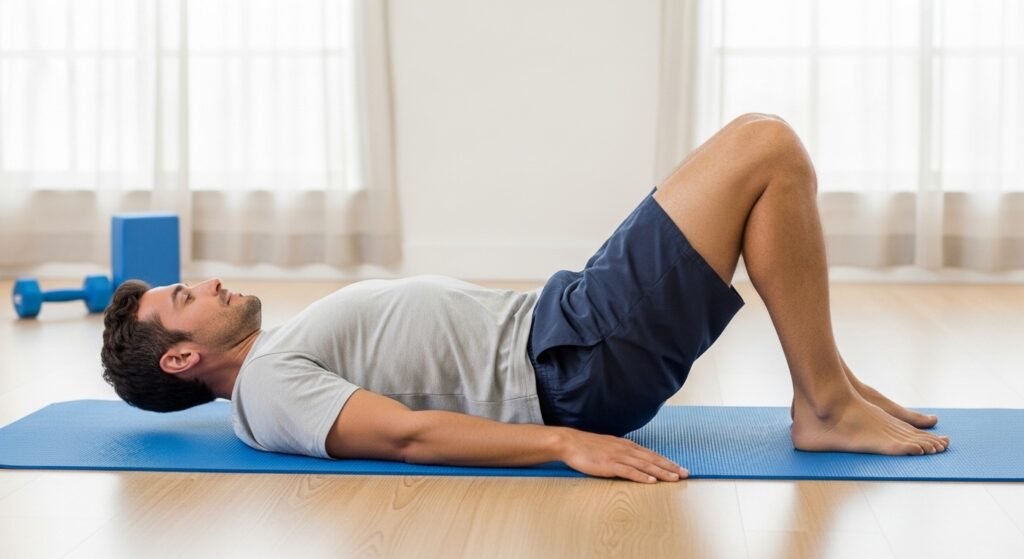
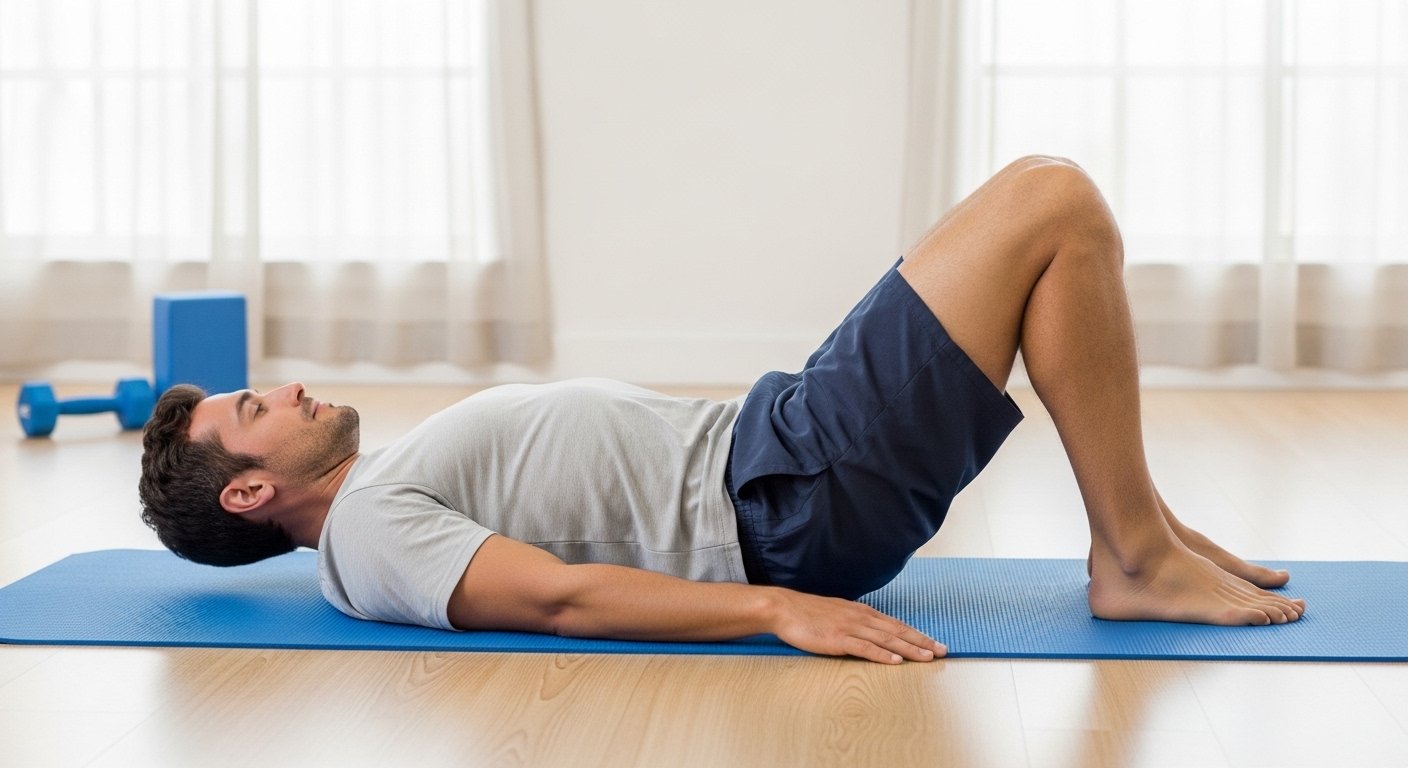
- Pelvic Tilt (supine): Lie on your back, knees bent, feet flat. Gently tighten your abs to flatten your lower back against the floor. Hold 5–10 seconds, relax. Repeat 8–10 times. This builds foundational control.
- Single/Double Knee-to-Chest Stretch: Hug one or both knees gently toward your chest. Hold 15–30 seconds. Great for releasing tight hips and lower back.
- Hamstring Stretch (supine with strap): Use a towel or strap around one foot, extend the leg upward while keeping the other bent. Hold 20–30 seconds per side.
- Modified Dead Bug: Lie on back, arms up, knees bent. Slowly extend one arm and opposite leg while keeping back flat. Alternate sides slowly.
- Bird Dog (basic): On hands and knees, extend opposite arm and leg while keeping hips level. Hold briefly, switch.
Tips: Always brace your abs like you’re preparing for a gentle punch. Progress to standing versions only when comfortable.
Exercises for Lumbar Spondylosis
Focus on reducing stiffness, gentle mobility, and light core engagement.
- Pelvic Tilt: As above—excellent for awareness and gentle strengthening.
- Cat-Cow Stretch: On hands and knees, slowly arch (cow) and round (cat) your back. Move with your breath, 5–10 reps.
- Knee Rolls (supine): Knees bent, feet flat—gently roll knees side to side, keeping shoulders down.
- Knee-to-Chest Stretch: Pull one knee in, hold comfortably.
- Child’s Pose or gentle forward lean: Kneel, sit back toward heels, arms forward for a mild stretch.
Add daily walking for overall relief and better joint nutrition.
Exercises for Bulging Disc (Lumbar)
Aim to centralize symptoms with gentle decompression; McKenzie-inspired extensions often help if they ease leg pain.
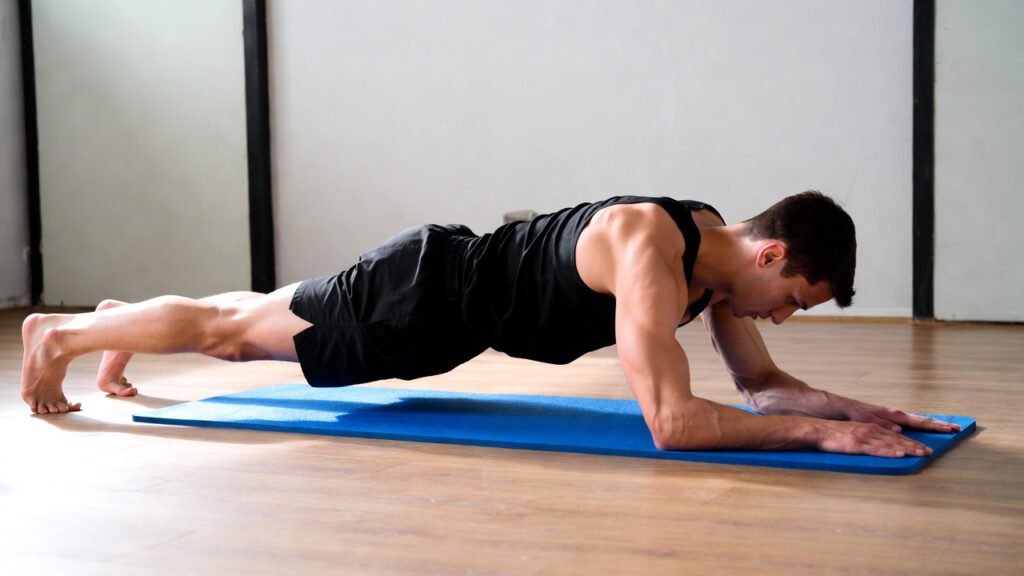
- Prone Lying / Prone on Elbows: Lie face down, relax for a few minutes, then prop on elbows (keep hips down). Hold as tolerated.
- Press-Ups / Cobra: From prone, gently press up with arms (like a mini cobra pose), keeping hips down. Repeat 5–10 times if it feels relieving.
- Pelvic Tilt or Abdominal Bracing: Engage core to protect the spine.
- Bird Dog or modified plank: For stability without compression.
- Hamstring Stretch: Supine version to ease nerve tension.
Note: If bending forward feels better (centralizes pain), include gentle flexion; always personalize with a PT.
Back Exercises Using a Fitness/Stability Ball
A stability ball (Swiss ball) adds gentle instability to engage deeper core muscles, improve posture, balance, and provide light traction for discs and back.
Benefits include better blood flow, reduced stiffness, and stronger support without heavy strain—supported by studies showing core stabilization on balls can help manage chronic low back pain.
- Seated Pelvic Tilts/Rocking: Sit tall, feet flat. Gently rock pelvis forward/back or small circles.
- Seated Marching or Hip Circles: Alternate lifting feet slightly or circle hips slowly.
- Ball Bridge: Lie on back, heels on ball. Lift hips, hold, lower. Strengthens glutes and back.
- Prone Back Extension: Stomach over ball, hands behind head—gently lift upper body.
- Hamstring Curl: Heels on ball, lift hips, roll ball in by bending knees.
Tips: Choose the right size (hips/knees at ~90° when seated). Start seated if new to balls for safety.
Combining Approaches: Sample Routines
Beginner routine (10–15 min): Pelvic tilts + knee-to-chest + seated ball tilts. Do daily.
Intermediate: Add Bird Dog, Cat-Cow, ball bridge. 3–4x/week.
Daily maintenance: Mix 2–3 condition-specific moves with ball work for variety.
Additional Tips for Long-Term Back Health
- Prioritize good posture and ergonomics (e.g., supportive chair, proper lifting—bend knees, not back).
- Progress slowly; add light resistance only when basics feel easy.
- Try complementary aids: Heat before exercise, ice after; modified yoga or walking.
- Track progress—if pain persists or worsens, see a specialist promptly.
Frequently Asked Questions (FAQs)
1. Can exercises cure spondylolisthesis, spondylosis, or a bulging disc? No, exercises cannot “cure” these structural conditions, but they can significantly reduce pain, improve function, strengthen supporting muscles, and help prevent worsening in many cases—often avoiding or delaying surgery.
2. How soon can I expect relief from these exercises? Many people notice reduced stiffness and milder pain within 1–4 weeks of consistent, gentle practice. Full benefits often take 4–12 weeks. Be patient and consistent.
3. Are stability ball exercises safe for all back conditions? They’re generally helpful for core engagement and low back pain relief, but start seated and avoid if unstable or if any move causes pain. Consult a professional to ensure they’re right for your specific condition.
4. What if exercises make my pain worse? Stop immediately. Pain during or after means the movement may not suit you—seek guidance from a doctor or PT to modify or choose alternatives.
5. Can I do these exercises every day? Yes, gentle ones like pelvic tilts or walking often work well daily. For strengthening moves, 3–4 days per week with rest days helps recovery.